
Pasteurizer: how pasteurization works
What is pasteurization?
Pasteurization is a method of preserving a product by heating it. The process destroys the micro-organisms present in products by heating them and holding them at a set temperature for a specified time. For beer, for example, this is 65°C. The pasteurization process generally always follows the same pattern. The way heat is delivered to the product divides the process into two main types.
Flash (flow-through) pasteurization is a process for preserving liquid products as they flow through a heat exchanger, briefly heating the product to a set temperature. Once the process is complete, the product is cooled and filled into packaging. Flash pasteurizers are most commonly used in the dairy industry. In brewing, flash pasteurization is being phased out, as the process interferes too much with the flavour characteristics of the product.
Tunnel pasteurization preserves products that are already sealed in their final packaging. The product is sprayed with water at a specified temperature, held and then cooled. Cooling stops the pasteurization process.
Pasteurization process parameters
Pasteurization process parameters and pasteurization units: what is it all about?
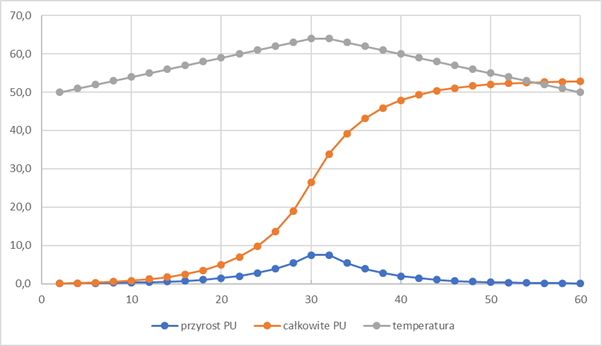
As mentioned earlier, choosing the right temperature and time for the pasteurization process is critical. Over-pasteurized beer changes its taste and colour. Under-pasteurized beer will spoil sooner. The appropriate number of pasteurization units (PU) for a given type of beer is determined experimentally by the process technologist, based on trial runs of bottles through the pasteurization tunnel. During these trials, the technologist sets the speed of the conveyor carrying the bottles through the pasteurization tunnel and the temperature of the spray water. By adjusting these values, we change the number of pasteurization units delivered to the product. The course of pasteurization inside the bottle can be tracked using a device that records temperature as a function of time.
Tunnel pasteurizer: a machine for pasteurization
A spray pasteurizer is a compact machine in the form of a tunnel in which bottles are conveyed and sprayed with water at the appropriate temperature.
Design of a tunnel pasteurizer:
- The main body is made of stainless steel and mounted on a frame.
- A steam circuit with plate heat exchangers, which heats the water used to spray the bottles.
- Side conveyors at the infeed and outfeed of the machine, made of stainless steel, which load and discharge the bottles.
- A control cabinet that controls the operation of the machine. The cabinets we install are based on a SIEMENS controller.
- A pump system with spray nozzles, with each section of the tunnel pasteurizer fitted with its own pump.
- Instrumentation and control systems for each section, an overfill sensor and signal towers.
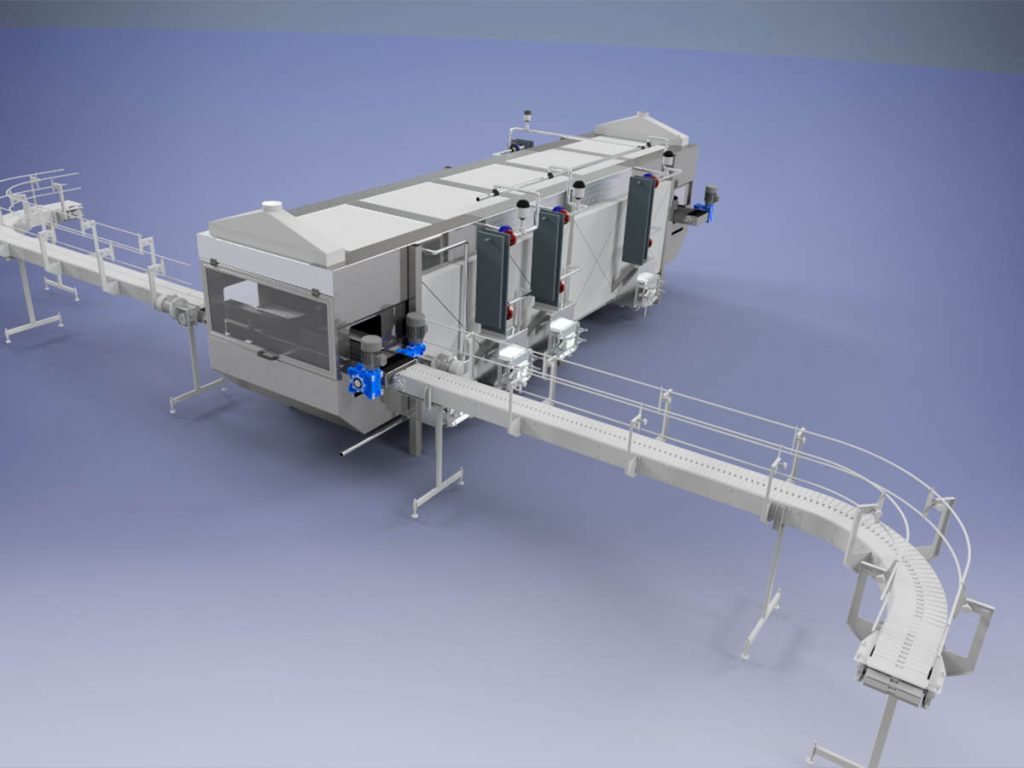
How a tunnel pasteurizer works:
- The side infeed conveyor takes the product from the production line and transfers it to the main conveyor inside the tunnel.
- The main conveyor carries the product beneath the spray nozzles. The conveyor speed is set on the operator panel and is directly linked to the number of pasteurization units (PU) we want to deliver to the product.
- The spray nozzles spray water at the temperature set on the panel. Each section has its own temperature setting.
- After leaving the pasteurization zone, the product is cooled. Thanks to efficient internal heat recovery, there is no need to install additional cooling sources.
- The cooled bottles are dried and passed on to the packing machine.
Having passed through the full length of the pasteurizer, the product is pasteurized, cooled and dried.
Tell us what you need – we will select the right solution and present the options.
Contact us